Proto-oncogene
Normal
cellular genes homologous to viral oncogenes. The products
of proto-oncogenes are important regulators of biological
processes and appear to be involved in the events that serve to maintain
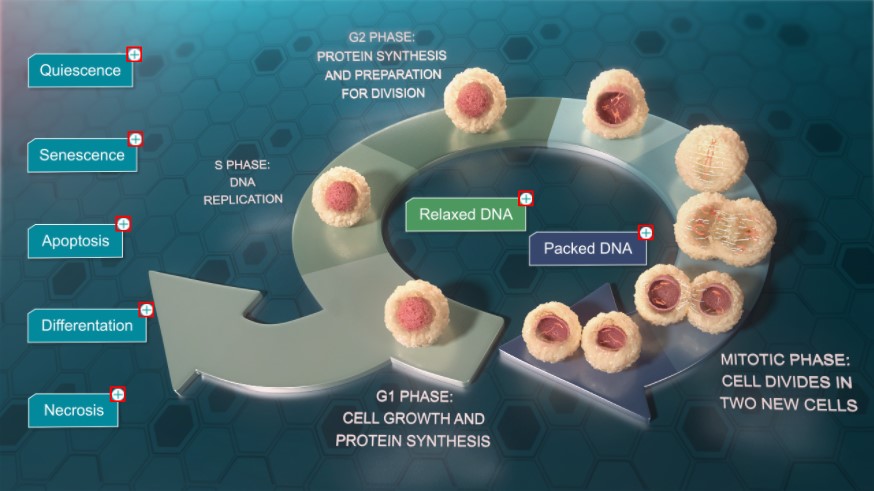
the ordered procession through the cell cycle24.
Within every cell in our body is a class of genes known as proto-oncogenes. Proto-oncogenes play important roles in controlling cell division and cell death during our growth and development. However, if a proto-oncogene becomes mutated, or the cell makes extra copies of the proto-oncogene, it can become hyper-activated and lead to the appearance of uncontrolled cell division. This therefore contributes to the development of a cancer cell from a normal cell. Once a proto-oncogene is activated by a mutation, we then refer to it as an oncogene. So it's the activation of oncogenes that's one type of genetic lesion that contributes to the development of a tumour24.