Medical Glossary
A | B | C | D | E | F | G | H | I | J | K | L | M | N | O | P | Q | R | S | T | U | V | W | X | Y | Z | ALL
L |
|---|
Lentigo maligna (LM) & lentigo maligna melanomas (LMM)Lentigo maligna (LM) and lentigo maligna melanoma (LMM) are types of skin cancer. They begin when the melanocytes in the skin grow out of control and form tumours. LM refers to the early stage of the disease, when the cancer is confined to the top layer of skin. LMM refers to the disease after it has grown deeper into the skin and is considered invasive13. | |
LeptomeningealHaving to do with the two innermost meninges (thin layers of tissue that cover and protect the brain and spinal cord)1. | |
LesionAn area of abnormal tissue. A lesion may be benign (not cancer) or malignant (cancer)1.
| |
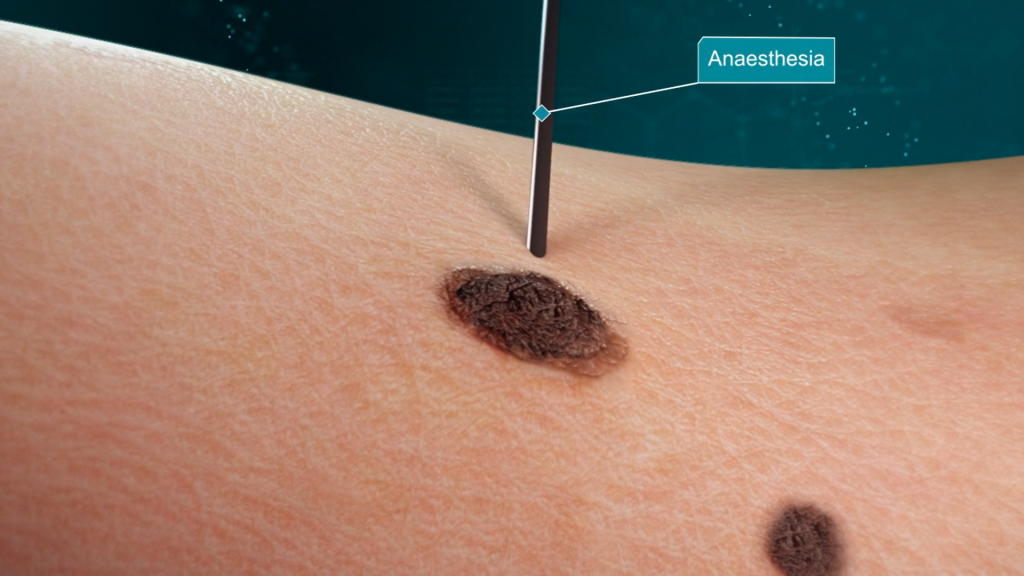
Local anaestheticLocal anaesthesia is a temporary loss of feeling in one small area of the body caused by special drugs called anaesthetics. The patient stays awake but has no feeling in the area of the body treated with the anaesthetic. Local anaesthetics may be injected or put on the skin to lessen pain during medical, surgical, or dental procedures1.
| |
Lymph channelSee lymph vessel1. A thin tube that carries lymph (lymphatic fluid) and white blood cells through the lymphatic system. Also called lymphatic vessel1.
| |
Lymph glandSee lymph node1. A small bean-shaped structure that is part of the body’s immune system. Lymph nodes filter substances that travel through the lymphatic fluid, and they contain lymphocytes (white blood cells) that help the body fight infection and disease. There are hundreds of lymph nodes found throughout the body. They are connected to one another by lymph vessels. Clusters of lymph nodes are found in the neck, axilla (underarm), chest, abdomen, and groin. For example, there are about 20-40 lymph nodes in the axilla. Also called lymph gland1.
| |
Lymph nodeA small bean-shaped structure that is part of the body’s immune system. Lymph nodes filter substances that travel through the lymphatic fluid, and they contain lymphocytes (white blood cells) that help the body fight infection and disease. There are hundreds of lymph nodes found throughout the body. They are connected to one another by lymph vessels. Clusters of lymph nodes are found in the neck, axilla (underarm), chest, abdomen, and groin. For example, there are about 20-40 lymph nodes in the axilla. Also called lymph gland1. | |
Lymph node biopsyA procedure in which all or part of a lymph node is removed and checked under a microscope for signs of infection or disease, such as cancer. There are several types of lymph node biopsies, including excisional biopsy (removal of entire lymph node), incisional biopsy (removal of part of a lymph node), core needle biopsy (removal of tissue from a lymph node using a wide needle), and fine-needle aspiration biopsy (removal of tissue from a lymph node using a thin needle)1.
| |
Lymph node clumpsSee lymph nodes (matted). A group of fused lymph nodes. Matted lymph nodes may be a sign of certain conditions, such as infection, sarcoidosis, or lymphoma. They also may be a sign of cancer that has spread to the lymph nodes1. | |
Lymph nodes (matted)A group of fused lymph nodes. Matted lymph nodes may be a sign of certain conditions, such as infection, sarcoidosis, or lymphoma. They also may be a sign of cancer that has spread to the lymph nodes1. | |
Lymph vesselsA thin tube that carries lymph (lymphatic fluid) and white blood cells through the lymphatic system. Also called lymphatic vessel1.
| |
Lymphatic systemThe tissues and organs that produce, store, and carry white blood cells that fight infections and other diseases. This system includes the bone marrow, spleen, thymus, lymph nodes, and lymphatic vessels (a network of thin tubes that carry lymph and white blood cells). Lymphatic vessels branch, like blood vessels, into all the tissues of the body. Also called lymph system1. | |
Lympho-vascular invasionLympho-vascular invasion happens when cancer cells break into the lymph channels. This increases the risk of the cancer traveling outside the primary site or coming back in the future. | |
LymphocyteA type of immune cell that is made in the bone marrow and is found in the blood and in lymph tissue. The two main types of lymphocytes are B lymphocytes and T lymphocytes. B lymphocytes make antibodies, and T lymphocytes help kill tumor cells and help control immune responses. A lymphocyte is a type of white blood cell1. | |
LymphocyticReferring to lymphocytes, a type of white blood cell. For example, lymphocytic inflammation in the skin is skin that is infiltrated with lymphocytes14. | |
Lysine | |