Medical Glossary
A | B | C | D | E | F | G | H | I | J | K | L | M | N | O | P | Q | R | S | T | U | V | W | X | Y | Z | ALL
P |
|---|
Papillary dermisThe thin top layer of the dermis (the inner layer of the skin). The papillary dermis has connective tissue and blood vessels that give nutrients to the epidermis (the outer layer of the skin) and that help control the temperature of the skin1.
| |
ParenchymaThe essential or functional elements of an organ1. The functional part of an organ, as opposed to the supporting tissue (stroma)20.
| |
ParenchymalDescribing the essential and distinctive tissue of an organ. In the context of a sentinel lymph node biopsy it means the melanoma is within the lymph node9. | |
PathogenA specific causative agent (such as a bacterium or virus) of disease9. | |
PathogenesisThe origination and
development of a disease9. | |
PathogenicCausing or capable of causing disease9. | |
Pathogenic variantA genetic alteration that increases an individual’s susceptibility or predisposition to a certain disease or disorder. When such a variant (or mutation) is inherited, development of symptoms is more likely, but not certain. Also called deleterious mutation, disease-causing mutation, predisposing mutation, and susceptibility gene mutation1.
| |
PathologicalIndicative of disease9. | |
Pathological stageThe stage of cancer (amount or spread of cancer in the body) that is based on a pathological assessment (analysis of tissue under a microscope) and how different from normal the cells in samples of tissue look under a microscope.. Different to clinical stage1.
| |
PathologistA physician who has special training in identifying diseases by studying cells and tissues under a microscope1.
| |

PathologyThe scientific study of disease6. | |
Pathology reportThe description of cells and tissues made by a pathologist based on microscopic evidence, summarising microscopic and macroscopic findings of a tissue, and an important part of a diagnosis of a disease1. | |
Pentose SugarA simple sugar (monosaccharide) with five carbon atoms. Importantly they are sugars such as ribose (part of RNA) and deoxyribose (part of DNA) found in nucleotides. | |
Peripheral Nervous SystemThe peripheral nervous system consists of the nerves that branch out from the brain and spinal cord. These nerves form the communication network between the CNS (Central Nervous System) and the body parts. The peripheral nervous system is further subdivided into the somatic nervous system and the autonomic nervous system. The somatic nervous system consists of nerves that go to the skin and muscles and is involved in conscious activities. The autonomic nervous system consists of nerves that connect the CNS to the visceral organs such as the heart, stomach, and intestines. It mediates unconscious activities17. | |
Permeabilisation | |
PhenotypeThe physical, biochemical, and behavioural traits that can be observed in a person. Some examples of a person’s phenotype are height, eye colour, hair colour, blood type, behaviour, and the presence of certain diseases. A phenotype is based on a person’s genes and some environmental factors, such as diet, exercise, and smoking1.
| |
PhosphorylateTo cause (an organic compound) to take up or combine with phosphoric acid or a phosphorus-containing group9. | |
Phosphorylation | |
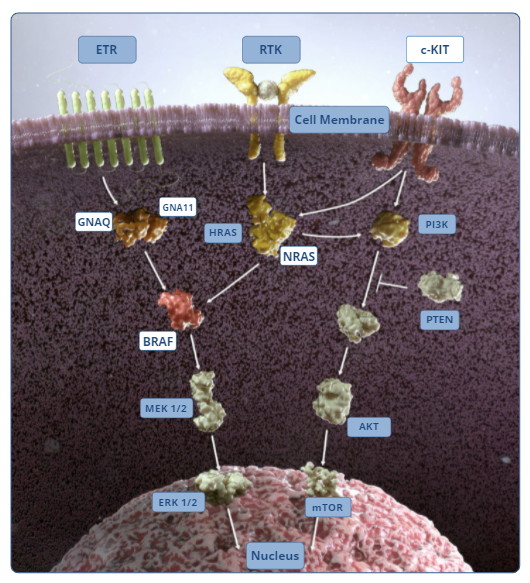
PI3K | |