Medical Glossary
A | B | C | D | E | F | G | H | I | J | K | L | M | N | O | P | Q | R | S | T | U | V | W | X | Y | Z | ALL
V |
|---|
ValineA branched-chain essential amino acid that has stimulant activity. It promotes muscle growth and tissue repair. It is a precursor in the penicillin biosynthetic pathway24. | |
VariantAny change in the DNA sequence of a cell. Variants may be caused by mistakes during cell division, or they may be caused by exposure to DNA-damaging agents in the environment. Variants can be harmful, beneficial, or have no effect. If they occur in cells that make eggs or sperm, they can be inherited; if variants occur in other types of cells, they are not inherited. Certain variants may lead to cancer or other diseases. A variant is sometimes called a mutation1. An alteration in the most common DNA nucleotide sequence. The term variant can be used to describe an alteration that may be benign, pathogenic, or of unknown significance. The term variant is increasingly being used in place of the term mutation1.
| |
Vascular InvasionVascular invasion happens when cancer cells break into the blood vessels. This increases the risk of the cancer traveling outside the primary site or coming back in the future. | |
Vascular systemA large network of blood vessels and lymph vessels that moves blood and lymph throughout the body. The blood vessels carry blood between the heart and the tissues and organs in the body. They also carry oxygen and other gases, nutrients, and hormones to the tissues and help them get rid of waste products. The lymph vessels carry lymph from tissues in different parts of the body to the bloodstream through a large vein near the heart. The vascular system helps control the amount of fluid in the body and helps protect it from infection and disease1.
| |
VasculatureThe blood vessels or arrangement of blood vessels in an organ or part9.
| |
VeinA blood vessel that carries oxygen-depleted blood to the heart from tissues and organs in the body1. | |
Vertical Growth PhaseIn the vertical growth phase, the lesion develops vertically, forming a tumour21. | |
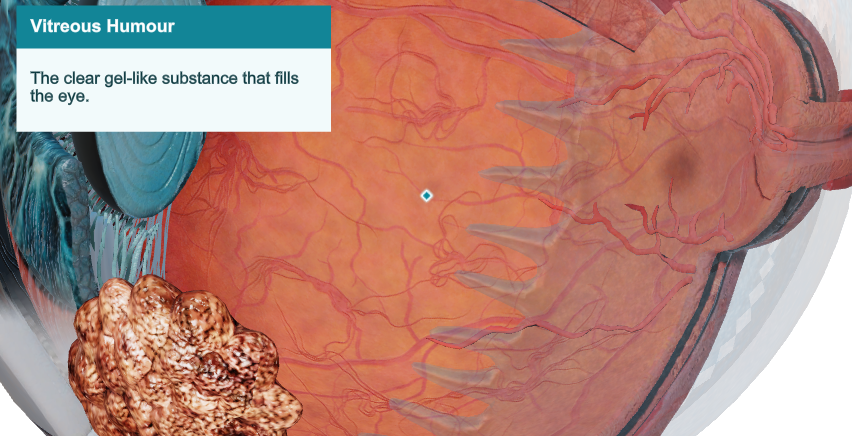
Vitreous humourThe vitreous humour comprises a large portion of the eyeball. It is a clear gel-like substance that occupies the space behind the lens and in front of the retina at the back of the eye3.
| |